Announcement: Now accepting design beta partners · Read more

For the builders of agentic AI

See every agent.
Govern every connection.

Give enterprises the confidence to let agents do more.

Maya adds independent, per-agent control on the network path.
No traffic decryption. No agent code changes.

The agent is the unit of control Illustrative connection policy
One agent, two destinations, a precise boundary The research agent's declared model endpoint is allowed through Maya. A connection to an undeclared destination is blocked. Other agents continue within their own mandates. 01 / DECLARE 02 / OBSERVE & ENFORCE 03 / KEEP THE FLEET RUNNING research-agent A defined mandate MAYA Per-agent policy Declared destination ALLOWED Undeclared destination BLOCKED Other agents keep their own connections. Fleet continues

research-agent A defined mandate

MAYA Per-agent policy

Declared destination Allowed
Undeclared destination Blocked

Other agents keep running.

A boundary around each agent. Room for the rest of the fleet to work.

01 · The missing layer

Autonomy needs a boundary.

One agent in a fleet goes wrong.
Can you identify it? Can you stop it?

Agents connect to models, data, tools, and other agents. A single workflow can cross runtimes and cloud boundaries. Enterprises need to know which agent made each connection and whether that connection belongs within its mandate.

Maya makes the logical agent a governable unit on the network path. Security teams can allow, limit, or stop an agent, or individual flows within its traffic, while the rest of the fleet keeps working.

Identity

Defines the principal’s permitted access.

Runtime controls

Govern activity within the agent’s runtime.

Maya

Enforces the agent’s mandate on its connections.

An independent layer that complements model and runtime safeguards.

02 · From intent to control

A mandate for every agent.
Evidence for every connection.

You set the policy. Maya applies it on the wire.

  1. Declare

    Define an agent’s policy mandate once, centrally.

  2. Observe

    Discover agents and attribute each connection to the agent that made it.

  3. Detect

    Expose undeclared agents and traffic that deviates from an agent’s mandate.

  4. Judge

    Evaluate the observed behavior against the policy you defined.

  5. Enforce

    Allow, limit, or stop the agent or the specific flow. Enforcement is reversible.

03 · An independent control layer

Control stays in your cloud.

The agent can act. The enterprise sets the boundaries.

Inside your environment
Maya runs in the customer’s own cloud account and VPC.
Encrypted traffic stays encrypted
Payload-blind enforcement. Maya never decrypts traffic.
The agent stays unchanged
Zero changes to agent code.
Each agent has its own boundary
Enforcement is scoped to the agent, or to flows within its traffic.

04 · One governed fleet

Many runtimes.
One place to govern.

Available now on AWS and GCP, in your cloud account.

Where agents run

From the laptop to the cloud.

Remote workers, Linux servers, Kubernetes, cloud agent runtimes, and container platforms.

Where they connect

Models. Data. Tools. Other agents.

LLM endpoints, databases, object storage, MCP servers, and SaaS services.

How teams operate

One console for the whole fleet.

Central policy and connection evidence, with OpenTelemetry export and gRPC / REST APIs. Works with identity providers including Okta, SPIFFE, and cloud IAM.

05 · The people behind Maya

Built by network
and security experts.

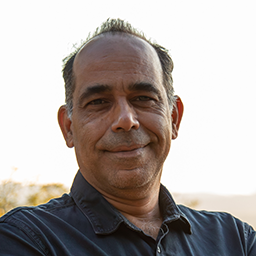
Daljeet Singh

Founder & CEO

Daljeet Singh

datapath · identity

Networking datapath architect with nearly three decades building forwarding planes, deep packet inspection, QoS, and control-plane security at Cisco, Juniper, and Brocade, and cloud infrastructure at IBM and Oracle. He built Maya's eBPF datapath and agent-identity model.

Nine US patents. M.S. Computer Engineering, Santa Clara University.
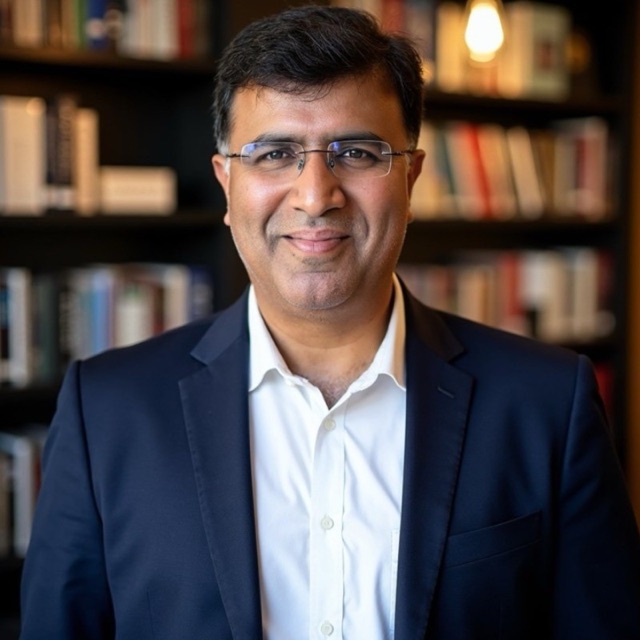
Rajiv Raghunarayan

Co-founder & CTO

Rajiv Raghunarayan

security · product

Founding engineer of Cisco's network infrastructure security group, where he worked on Control Plane Policing and deep packet inspection, then product and go-to-market leader at SentinelOne, Cyberinc (acquired by Forcepoint), Elastic Security, and Anomali.

Published IETF RFC author. MBA, UC Berkeley Haas.

Suneetha Sarala

VP of Engineering

Suneetha Sarala

cloud · production · compliance

Most recently Director of Software Engineering at Palo Alto Networks, running the data platform behind Strata Cloud Manager and multiple cloud-delivered security services: 2 trillion events and 6 PB a day in more than 20 countries, at 99.99% uptime. Twenty-five years in networking, cloud infrastructure, and security, going back to deep packet inspection and control-plane protection in Cisco IOS. She has taken products through federal certification including FedRAMP and FIPS 140-2, working directly with the validation labs. She owns Maya's engineering organization and Maya's path to production: control plane, telemetry, multi-cloud deployment, and release.

First-named inventor on a US patent for management-plane architecture. B.Tech, College of Engineering Trivandrum.

06 · Build with us

More autonomy starts
with a shared foundation.

Now onboarding design and research partners.

We’re looking for model builders, agent platforms, and research teams to evaluate how independent network enforcement can support enterprise agent deployments.

Bring a workflow that matters to your customers. Together, we can test how agent identity, policy, and connection evidence hold up as autonomy grows.

A proposed first collaboration

  1. 01

    Choose one real workflow.

    Agree on the runtime, destinations, and behavior to evaluate.

  2. 02

    Test the boundary.

    Define a mandate, then test undeclared agents and connections beyond it.

  3. 03

    Review the evidence together.

    Assess agent attribution, enforcement, and the effect on the remaining fleet.

Let’s start a conversation

What would your agents do
with a boundary you could trust?

Start a conversation

Or email [email protected] to explore a partnership.

Research inquiries: [email protected]

Cookies

We use analytics cookies to see how this site is used so we can make it better. Nothing is stored until you say yes. See our privacy policy.